Several drains backing up at once: what it means for your main sewer line
One slow sink is a local clog, but several fixtures misbehaving together is a different story.
October 7, 2026 · 4 min read
Most households deal with a slow drain now and then. A kitchen sink that takes a minute to empty, or a bathroom sink that gurgles after you brush your teeth, is usually a local clog: grease, hair or soap buildup sitting in the pipe just below that one fixture. It is annoying, but it is contained. A different situation starts when the tub, the toilet and the laundry drain all misbehave at the same time. That pattern usually means the problem is not at any one fixture. It is farther down the line, in the main sewer.
One drain or several: the pattern tells you a lot
Every fixture in a house drains into a branch line, and those branches join a single main drain that carries everything out of the building toward the sewer or septic system. When one fixture is slow, the restriction is almost always on that fixture's own branch. When several fixtures act up together, the restriction usually sits downstream of all of them. CSR Plumbing says it plainly on its drain cleaning page: several fixtures backing up together can point to the main sewer line.
These are the signs that deserve a main-line suspicion:
- A toilet gurgles or bubbles when the washing machine drains or a sink empties.
- Water rises in a tub or shower when you flush a toilet or run a sink elsewhere in the house.
- Fixtures in different rooms, or on different floors, slow down or back up at the same time.
- A floor drain in the basement, garage or utility room backs up or smells like sewage.
- A drain clears with a plunger, then clogs again within days.
What to stop doing the moment it happens
The instinct is to keep flushing, or to run one more load of laundry to see whether it clears. Resist it. CSR Plumbing's advice for a sewer backup is to stop using the affected sinks, toilets, showers and appliances, because additional water can make the backup worse. Every gallon you send into a blocked main has to go somewhere, and that somewhere is usually the lowest drain in the house.
- Skip the washing machine and the dishwasher until the line is clear.
- Hold off on showers and baths.
- Do not keep flushing to test whether the toilet has cleared.
- Keep children and pets away from sewage or standing water.
Chemical drain openers are a poor choice here. A product poured into a line that is already full of standing water just sits there, and it becomes one more thing the person clearing the line has to deal with.
Find the cleanout before the plumber arrives
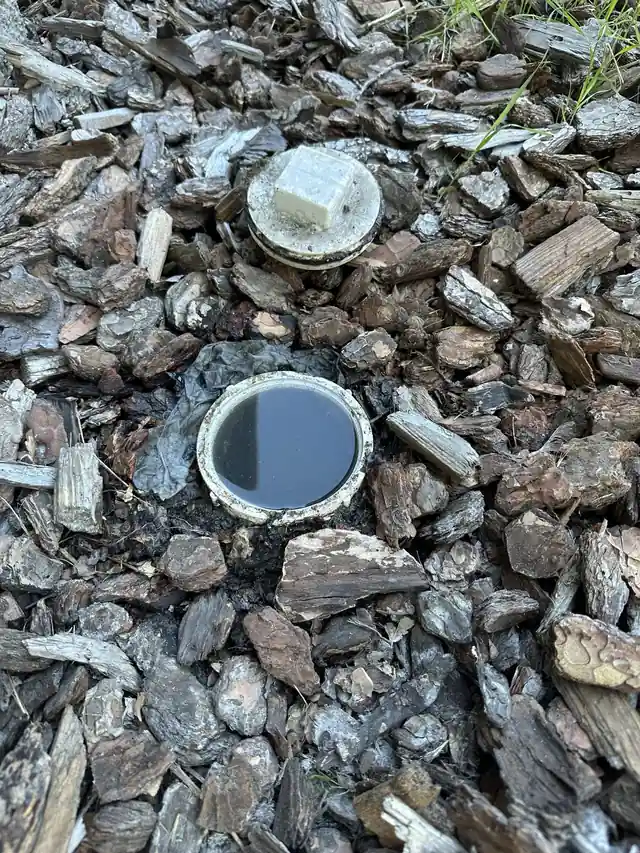
A cleanout is a capped pipe fitting that gives a plumber direct access to the drain line without pulling a toilet. You will often find one as a short pipe with a threaded cap near the foundation, in a basement or crawl space, in a garage, or in the yard along the path between the house and the street. The photo above shows two capped cleanouts sitting in bark mulch, exactly the kind of fitting that is easy to walk past for years.
If you can locate yours, clear a path to it. CSR Plumbing lists this on its contact page: clear access to the affected fixture or cleanout before the technician arrives. Leave the cap on, though. If the line is backed up, there may be water standing behind that cap, and opening it without the right equipment can send sewage across your yard or floor.
How a main line gets cleared
A main line is cleared with professional cable equipment. A motorized machine feeds a rotating steel cable, fitted with a cutting head, down the line through the cleanout. The head breaks up buildup, pushes through debris and cuts roots so water can flow again. CSR Plumbing clears main sewer lines and accessible cleanouts, along with kitchen, bathroom and floor drains, and commercial kitchen and restroom drains.
Clearing the line is only half of the visit. CSR's process is to describe the symptoms, locate the likely restriction, then clear and test. After the line is cleared, the technician tests drainage and explains any conditions that may need repair. That last part matters, because what comes out on the cable is information about the pipe.
When the clog points at the main line itself
Sometimes a main line backs up once, because of a wad of paper products or a buildup of grease, and clears for good. Other times the blockage is a symptom of a damaged pipe. Repeated main-line backups, roots, and soil entering the line can indicate damage. Clearing the line restores flow, while repair addresses a failed section of pipe.
If roots or soil come back on the cable, or the line backs up again a few months later, a recurring clog should not be treated like a one-time clog. That is the point to talk about a sewer line repair instead of scheduling the same cleaning again. Older homes in the Yakima Valley can have older drain and sewer materials, and root intrusion and mineral buildup show up in different ways from one neighborhood to the next.
Calling about a backup in Yakima
If several drains in your Yakima-area home or business are backing up together, stop using water and call CSR Plumbing at (509) 480-2536. CSR works Monday through Friday and provides urgent help during weekday business hours when an opening is available, so call to check the next one. The office is closed Saturday and Sunday. If no one answers, leave a clear voicemail with your name, address, callback number and the plumbing problem.
CSR Plumbing & Drain Cleaning, (509) 480-2536
Call (509) 480-2536More articles
When drain cleaning is not enough and the sewer line needs repair
A cleaning clears the pipe, while a repair fixes the pipe, and knowing which one you need keeps you from repeating the same call.
Signs your main water line is leaking or failing
The pipe between the meter and your house is buried, so the first clues show up everywhere except at the pipe.