Signs your main water line is leaking or failing
The pipe between the meter and your house is buried, so the first clues show up everywhere except at the pipe.
October 7, 2026 · 3 min read
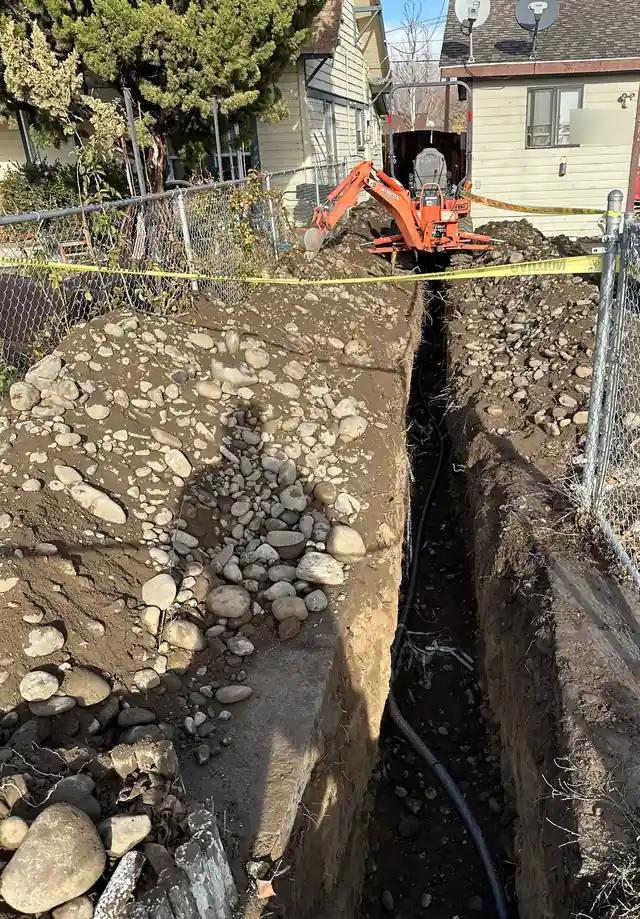
The main water line, also called the water service line, is the buried pipe that brings water from the utility connection to your building. You never see it, which is why a leak in it can run for weeks before anyone notices. The clues tend to show up somewhere else: in the yard, at the tap or on the bill.
Signs the buried line is failing
- Wet or soft soil between the meter and the building, even in dry weather.
- Low or inconsistent water pressure.
- Rust-colored or cloudy water.
- An unexplained increase in water use.
- Aging galvanized pipe, or failing plastic pipe.
- Repeated leaks along the same service line.
- Damage from soil movement or freezing.
One sign alone is a reason to look. Several together make a strong case. Pressure drops because water escapes from the line before it reaches the house. Rust-colored or cloudy water can come from galvanized pipe corroding from the inside, or from sediment stirred up by a failing line. A rising usage reading is the simplest tell of all: a leak is water running around the clock, and your meter keeps counting it.
Rule out the easy suspects first
Before you blame the buried line, check the plumbing you can see. A running toilet can use a surprising amount of water all day. A dripping hose bibb or a leaking supply line under a sink can do the same. CSR Plumbing repairs these everyday problems too, including leaking or running toilets, leaking supply and drain piping, and frozen or damaged hose bibbs.
A simple test helps. Shut off every fixture and appliance that uses water, then look at your water meter. If the dial or the leak indicator, if yours has one, is still moving, water is going somewhere. If everything inside checks out dry, the leak is more likely on the buried side, between the meter and the house.
Who owns which part of the line
People are often surprised to learn that part of the line is theirs. CSR Plumbing's answer is that responsibility can vary by location and utility. The customer-owned service line commonly begins after the utility connection or meter, but you should confirm with your local water provider before you assume either way.
Different towns and utilities draw the line in different places, so a call to the provider is worth making before any work starts. If the leak is on the provider's side of the connection, you want to know that before you pay to dig on your side of it.
If water is pooling at the meter
Water pooling around a meter or along the service line deserves a quick call. If you have an active supply leak, shut off the closest water valve if it is safe to do so, and know where your main shutoff is before you ever need it. Avoid digging around the line yourself, since other utilities may be buried nearby.
CSR Plumbing lists leaks around a water meter or service line among the problems it handles as urgent weekday help, when an opening is available. Sudden loss of water pressure is on that same list.
How a water line job comes together
CSR's process for a main water line has three steps: assess the route, define the scope, then install and pressure test. Assessing the route means looking at where the line runs, where it enters the building and what it is made of. Defining the scope covers what a repair or replacement involves, which may include locating utilities, excavation, durable new piping, pressure testing and inspection.
The photo above comes from CSR's own work. It shows an orange Kubota backhoe digging a narrow trench through cobble soil behind a chain-link fence, on a main water-line leak assessment. Narrow is the idea. A trench cut only as wide as the job needs leaves less of the yard disturbed.
Pressure testing is the step that matters most to you as the owner. It confirms that the finished line holds pressure, which is the whole reason for the work. Aging galvanized pipe and failing plastic pipe are the usual candidates for replacement with durable new piping, and repeated leaks along one line are often the sign that patching has run its course.
Calling about a water line in Yakima
If you are seeing wet soil, falling pressure or a water bill that does not match your habits anywhere in Yakima or the surrounding valley, call CSR Plumbing at (509) 480-2536. CSR is available Monday through Friday, so call during weekday business hours to check availability. The office is closed Saturday and Sunday.
CSR Plumbing & Drain Cleaning, (509) 480-2536
Call (509) 480-2536More articles
Several drains backing up at once: what it means for your main sewer line
One slow sink is a local clog, but several fixtures misbehaving together is a different story.
When drain cleaning is not enough and the sewer line needs repair
A cleaning clears the pipe, while a repair fixes the pipe, and knowing which one you need keeps you from repeating the same call.